Chimney Inspection Checklist: What Inspectors Actually Check
A walkthrough of what a Level 1 and Level 2 chimney inspection actually covers, so you know what to expect.
Knowing what's actually being checked during a chimney inspection helps you understand the findings — and know what questions to ask if something comes up.
Exterior masonry: the crown, cap, flashing, and visible brick or stone are checked for cracking, spalling, gaps, or signs of water intrusion.
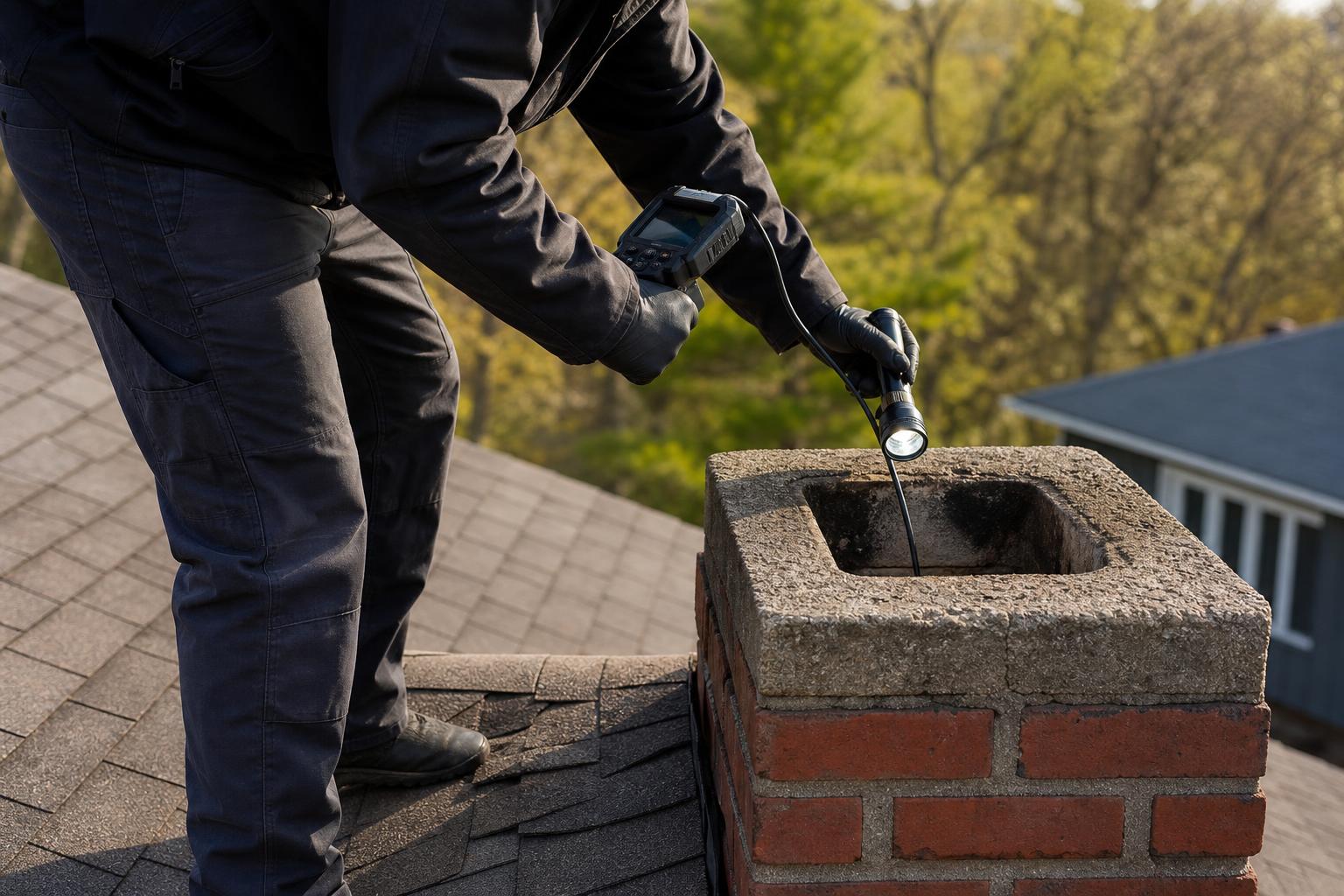
Flue interior: for a Level 1 inspection, this means a visual check of readily accessible portions. A Level 2 adds a full video-camera scan of the entire flue length, looking for cracked or missing tiles, creosote glaze staging, and any obstructions.
Damper and smoke chamber: checked for proper operation, corrosion, and creosote buildup, since debris here can restrict draft even when the rest of the flue looks fine.
Clearance to combustibles: inspectors check that framing, insulation, and other combustible materials maintain proper clearance from the flue, especially important in attics and around older construction.
Connections and transitions: any point where a wood stove, insert, or appliance connects to the chimney system gets specific attention, since these transitions are common failure points.
For a Level 2 inspection specifically — required for real estate transactions, after a chimney fire, or when changing fuel types — expect attic and crawlspace access wherever the chimney passes through, in addition to everything covered in a Level 1.
A thorough inspection should end with a written report and, for Level 2, video documentation — not just a verbal summary — so you have an objective record of exactly what was found.
Related Services
Chimney Inspection
Level 1, 2, and video-camera inspections that catch hidden cracks, gaps, and safety hazards before they become expensive repairs.
Learn more →