Creosote Buildup: What It Is and Why It Matters
The three stages of creosote, and why Stage 3 glaze is the leading cause of residential chimney fires.
Creosote is the black or brown residue that forms inside a chimney flue every time you burn wood. It's made up of unburned combustion byproducts — tars, resins, and particulates — that condense on the cooler surfaces of the flue as smoke rises.
Stage 1 creosote is light, flaky, and soot-like. It's the easiest to remove and represents normal, early-stage buildup from regular fireplace use.
Stage 2 creosote is denser and more textured, sometimes described as crunchy or tar-like. It requires more thorough brushing and is a sign a sweep is due if it hasn't happened recently.
Stage 3 creosote is a hardened, shiny glaze — and it's the dangerous one. This glaze is highly flammable and is the leading contributor to residential chimney fires. It often requires specialized chemical treatment or more aggressive mechanical removal rather than a standard brush.
Several factors accelerate creosote buildup: burning unseasoned or wet wood, restricting airflow with the damper mostly closed during a burn, and lower, slower-burning fires that don't fully combust. Nashville's humid climate can also contribute to faster buildup compared to drier regions.
The practical implication is straightforward: don't wait until you can see or smell buildup to schedule a sweep. By the time creosote is obviously visible, it may already be well into Stage 2 or 3.
Related Services
Chimney Sweep & Cleaning
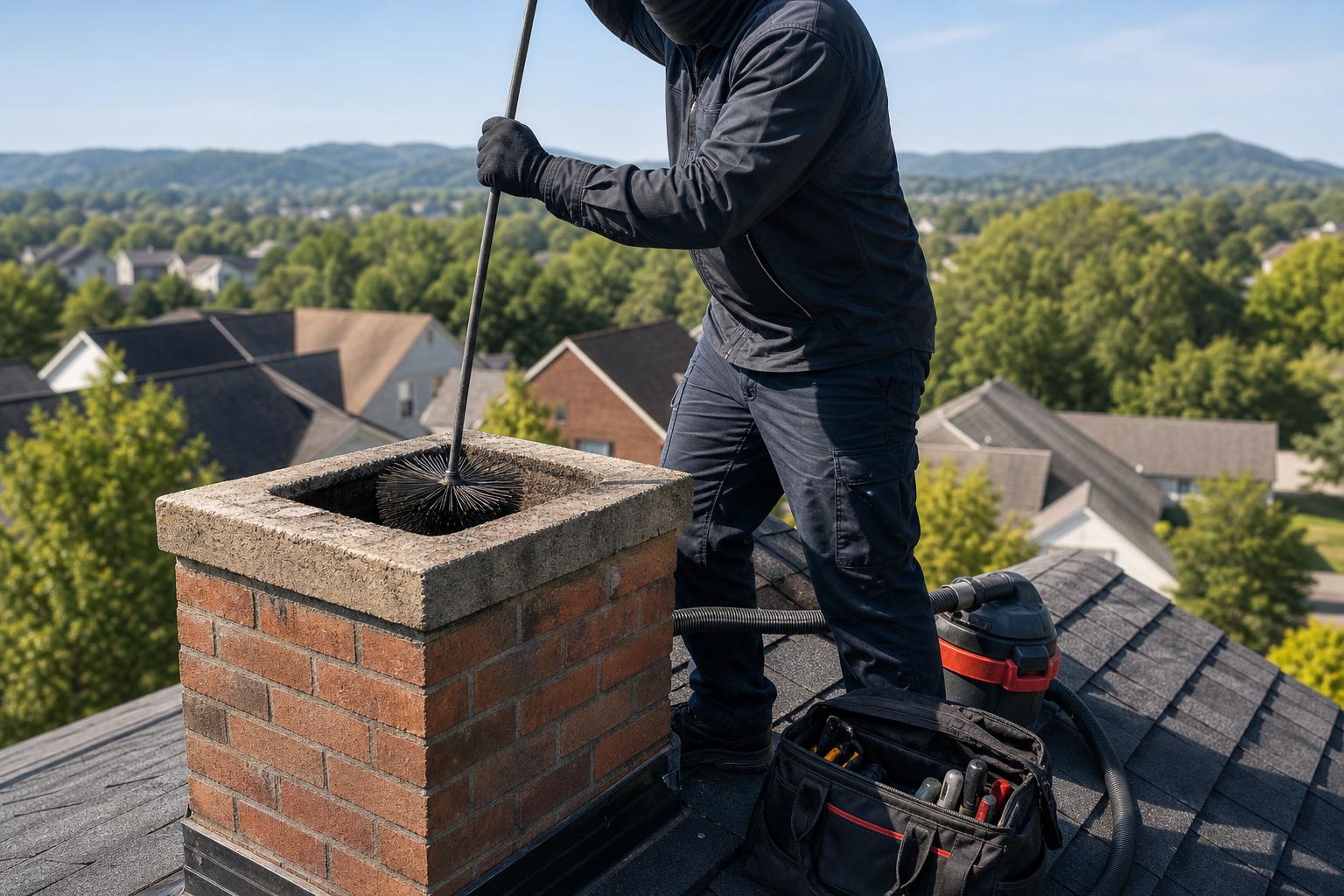
Professional creosote and soot removal that keeps your fireplace safe to burn and your flue breathing properly.
Learn more →