
Dryer Vent Fire Statistics: Why Cleaning Actually Matters
The real numbers behind dryer vent fires, and what they mean for how often you should get yours cleaned.
Dryer vent fires aren't a rare, theoretical risk — they're one of the more common and most preventable causes of home fires in the United States, and the leading cause is almost always the same thing: lint buildup restricting airflow.
The U.S. Fire Administration and National Fire Protection Association have both tracked clothes dryer fires for years, consistently finding that failure to clean the dryer and vent is the single largest contributing factor across incidents nationally.
The mechanism is straightforward: lint is highly flammable, and as it accumulates inside the vent duct — not just the lint trap — it restricts airflow, causing the dryer to run hotter than it's designed to. That heat, combined with a flammable lint buildup, is what creates fire risk.
Longer and more complex vent runs — multiple bends, long horizontal sections, or runs that go up through a roofline rather than straight out an exterior wall — trap lint faster and are statistically associated with higher risk than short, straight runs.
Homes still using flexible foil ducting face higher risk than those with rigid metal duct, since foil duct's ridged interior surface catches lint more easily and is more prone to sagging, which creates additional low points where lint collects.
The practical takeaway from the data is simple: annual professional cleaning of the full vent run — not just the lint trap — is the most effective, well-documented way to reduce dryer fire risk in a typical home.
Related Services
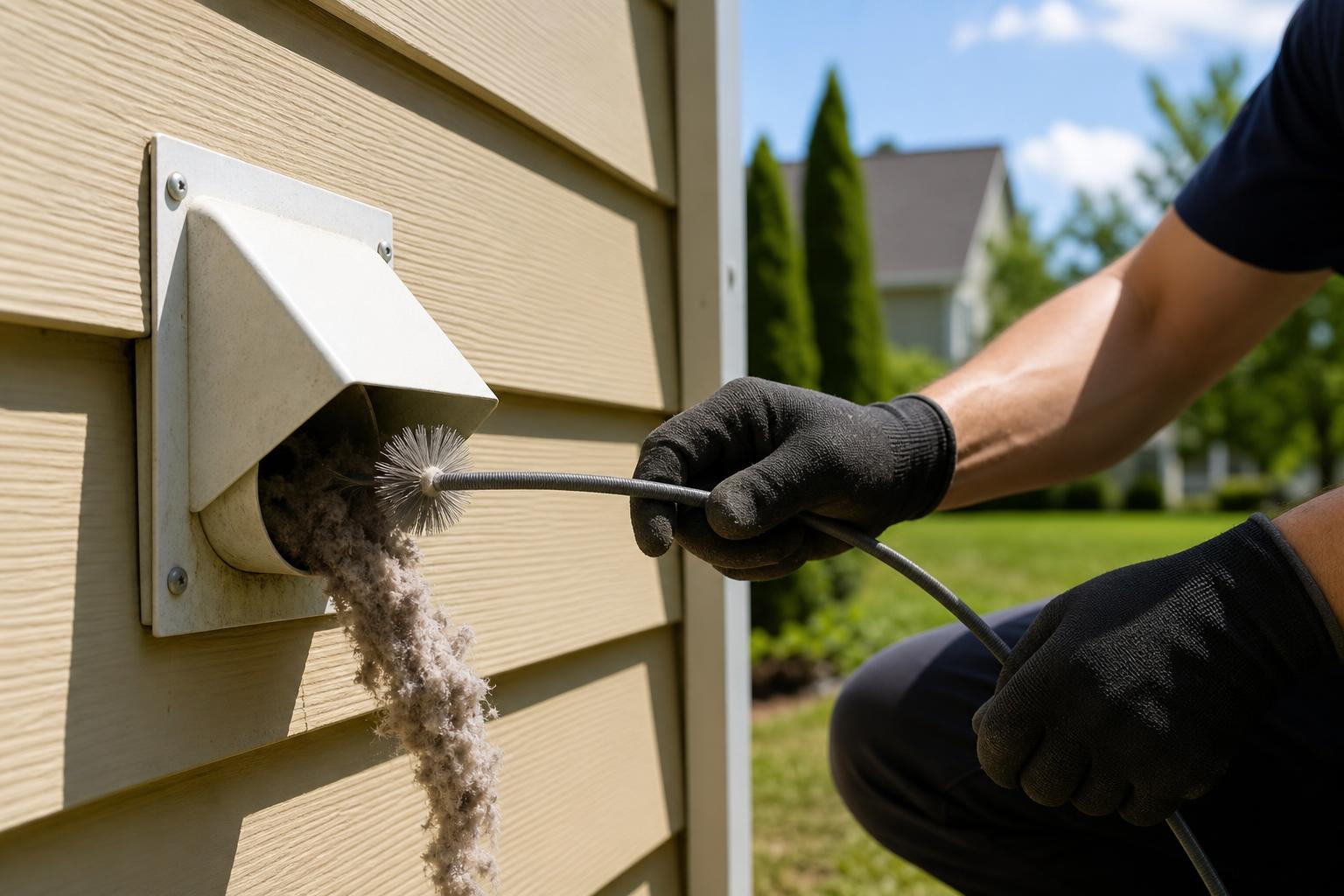
Dryer Vent Cleaning
Fast, thorough lint removal that cuts drying time, lowers fire risk, and gets your dryer running efficiently again.
Learn more →