
Gas Fireplace Service in Madison, Nashville (ZIP 37115)
Pilot, igniter, and venting repairs plus annual gas fireplace maintenance for safe, reliable operation.
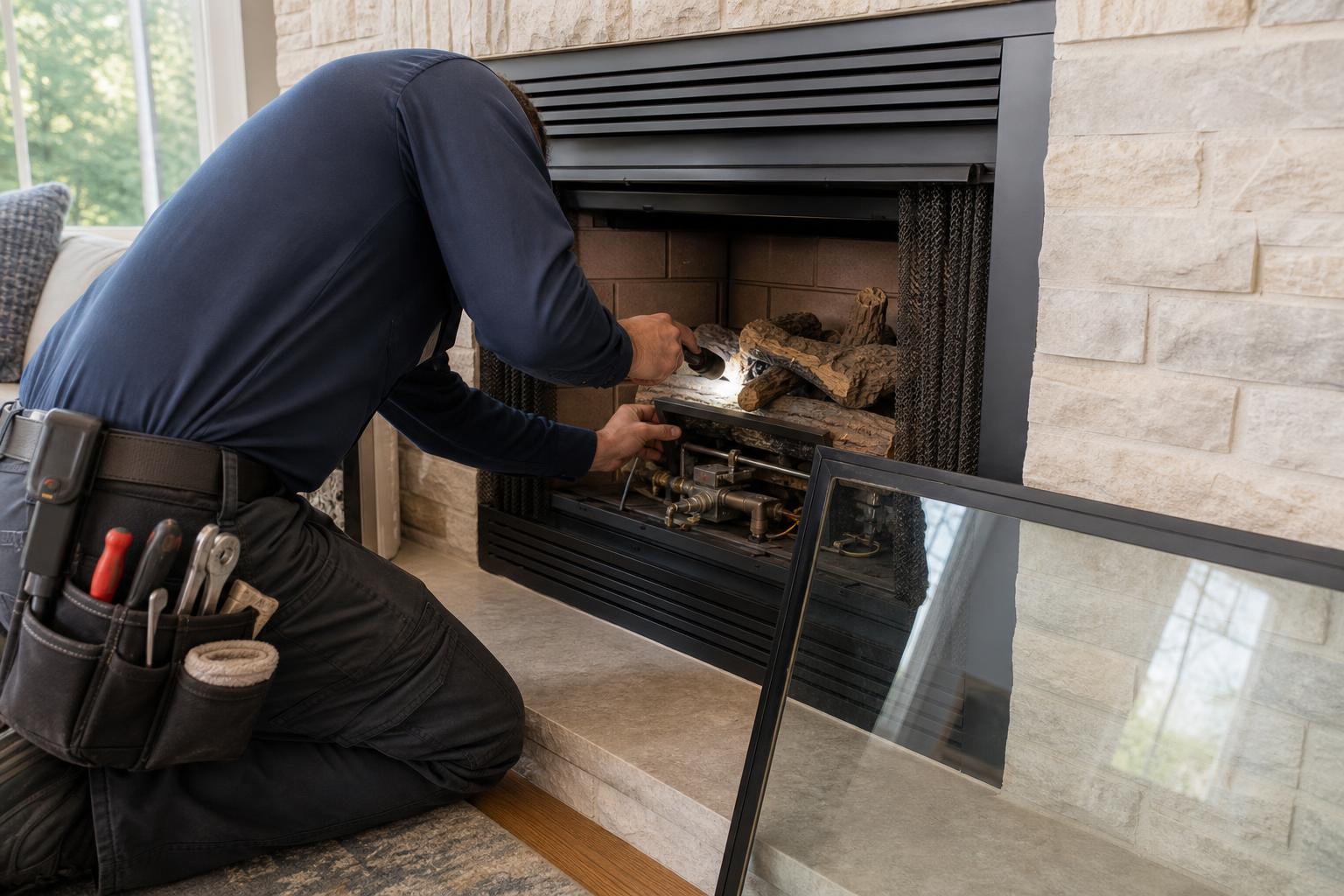
Gas fireplaces are the default in most newer Madison homes, and they're also easy to take for granted until the pilot won't stay lit on the first cold night of the year. Annual service catches wear on igniters and venting before it becomes a no-heat emergency.
Gas fireplaces need far less maintenance than wood-burning units, but 'low maintenance' doesn't mean 'no maintenance' — pilot assemblies, igniters, venting, and glass seals all wear over time, and a neglected gas fireplace can fail to light, produce soot on the glass, or worse, vent improperly. We service and repair gas fireplaces, inserts, and log sets across Nashville.
What's Included
- Pilot light, thermocouple, and igniter diagnosis/repair
- Annual gas fireplace inspection and cleaning
- Venting and flue inspection for direct-vent and B-vent systems
- Glass panel cleaning, gasket, and seal replacement
- Log set and burner adjustment for proper flame pattern
Warning Signs in Madison Homes
- The pilot light won't stay lit or takes several tries to ignite
- Soot building up on the inside of the glass panel
- A yellow, flickering flame instead of steady blue
- The unit shuts off on its own after a few minutes of operation
About the Madison Area
Madison sits across the Cumberland River in northeast Nashville, a mid-century suburb built up through the 1950s-70s along Gallatin Pike and Neelys Bend. Brick ranch homes with straightforward single-flue chimneys are the norm here, many original to their construction, and we see a steady mix of annual sweeps alongside overdue crown and cap repairs on homes that have had two or three owners since the chimney was last serviced. Madison's proximity to Rivergate's retail corridor has also brought newer townhome and infill development in recent years, adding a growing share of gas fireplace and dryer vent service calls to the neighborhood's traditionally wood-burning housing stock.
Frequently Asked Questions
Why does my gas fireplace glass turn black?
Sooting on the glass usually points to incomplete combustion — often from a dirty burner, misaligned logs, or a venting issue — rather than something wrong with the glass itself.
How often should a gas fireplace be serviced?
Annually, ideally before the heating season starts, to catch pilot, igniter, and venting wear before it causes a mid-winter breakdown.
Is a gas fireplace that won't stay lit dangerous?
It's usually a worn thermocouple or safety sensor doing exactly its job — shutting off gas flow when it detects a problem — so it should be repaired rather than bypassed.